
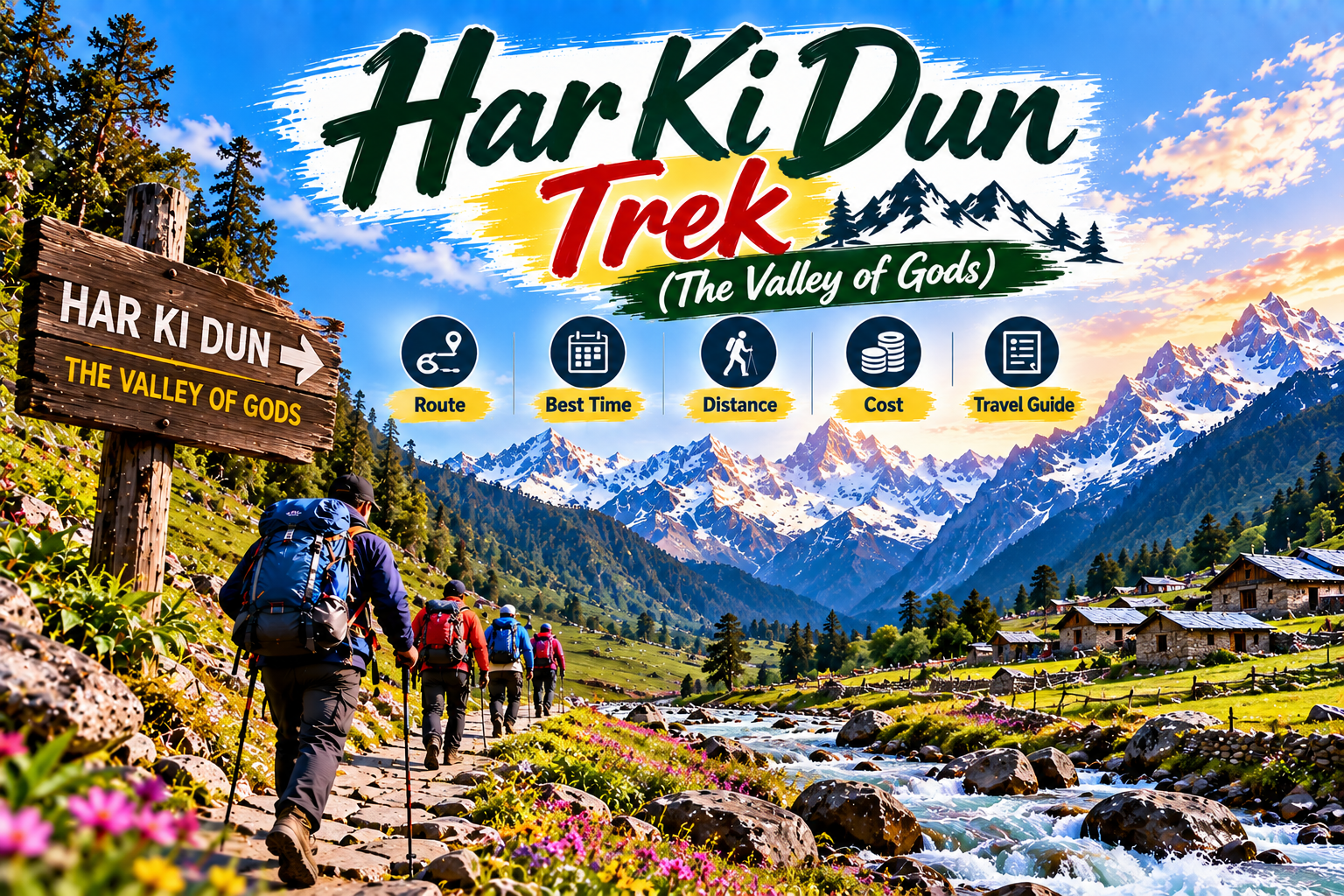
Cradled in the western Garhwal Himalayas of Uttarakhand within the Govind Pashu Vihar National Park, the Har Ki Dun Trek is celebrated as one of India's most enchanting alpine river valley trails. Rising to an elevation of 11,800 feet (3,566 meters), this cradle-shaped hanging valley offers an extraordinary blend of snow-crested mountain vistas, ancient wooden villages steeped in Mahabharata folklore, gushing crystal streams, and dense forests of golden oak, pine, and deodar.
Often referred to as the Valley of Gods, Har Ki Dun is the very route according to Indian epic tradition where the Pandava brothers and Draupadi embarked on their ascent to heaven towards the towering peaks of Swargarohini. Whether you are a beginner looking for your first multi-day Himalayan adventure or a seasoned trekker seeking pristine tranquility away from crowded tourist circuits, this comprehensive guide provides everything you need to plan your trek in 2026 and 2027.
Har Ki Dun Trek: Quick Facts & Highlights
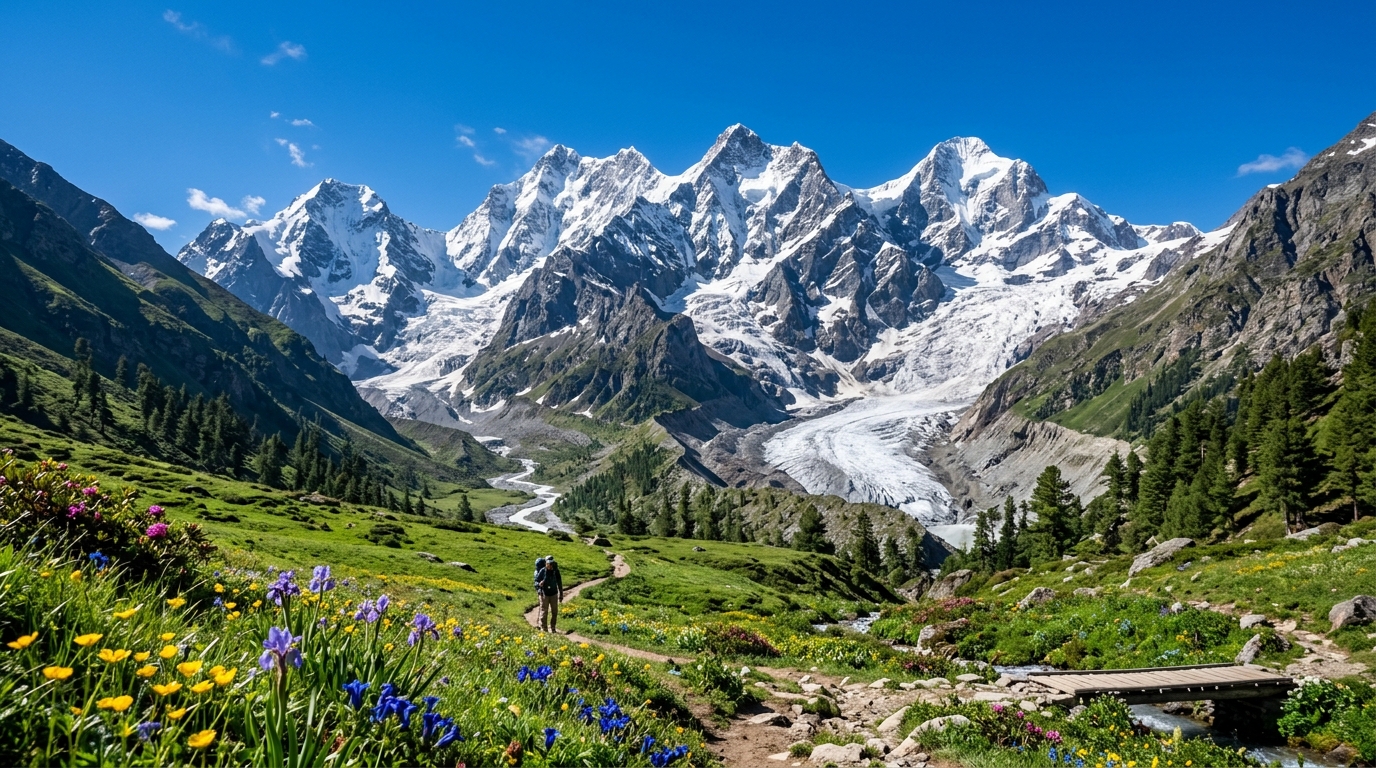
The iconic Swargarohini Massif (6,252 m) standing sentinel over the lush alpine basin of Har Ki Dun.
Why Choose Har Ki Dun Trek in Uttarakhand?
Unlike high-pass crossings that demand intense technical scrambling and extreme endurance, Har Ki Dun follows an ancient trading and grazing valley with steady, gradual altitude gain. Here is what makes this trek universally loved by mountain explorers:
1. Mythological Sanctity & Ancient Living Heritage
The trail passes through ancient hamlets like Osla, Gangaad, and Seema, where time has seemingly stood still for centuries. The villagers follow distinct customs and architecture found nowhere else in the world. Osla is famous for its intricate, multi-tiered carved cedar-wood temple—historically associated with Someshwar Devta (and locally linked with Duryodhana in Garhwali folklore). Interacting with the warm locals offers an authentic immersion into mountain lifestyle.
2. The Mesmerizing Supin River Valley
Throughout the trek from Taluka to the alpine ridge, the emerald waters of the Supin River accompany you. You cross picturesque wooden bridges, traverse cascading side-streams, and hike beneath lush canopies of deodar, silver birch (Bhojpatra), and wild rhododendron that erupt in vibrant crimson and pink blooms during April and May.
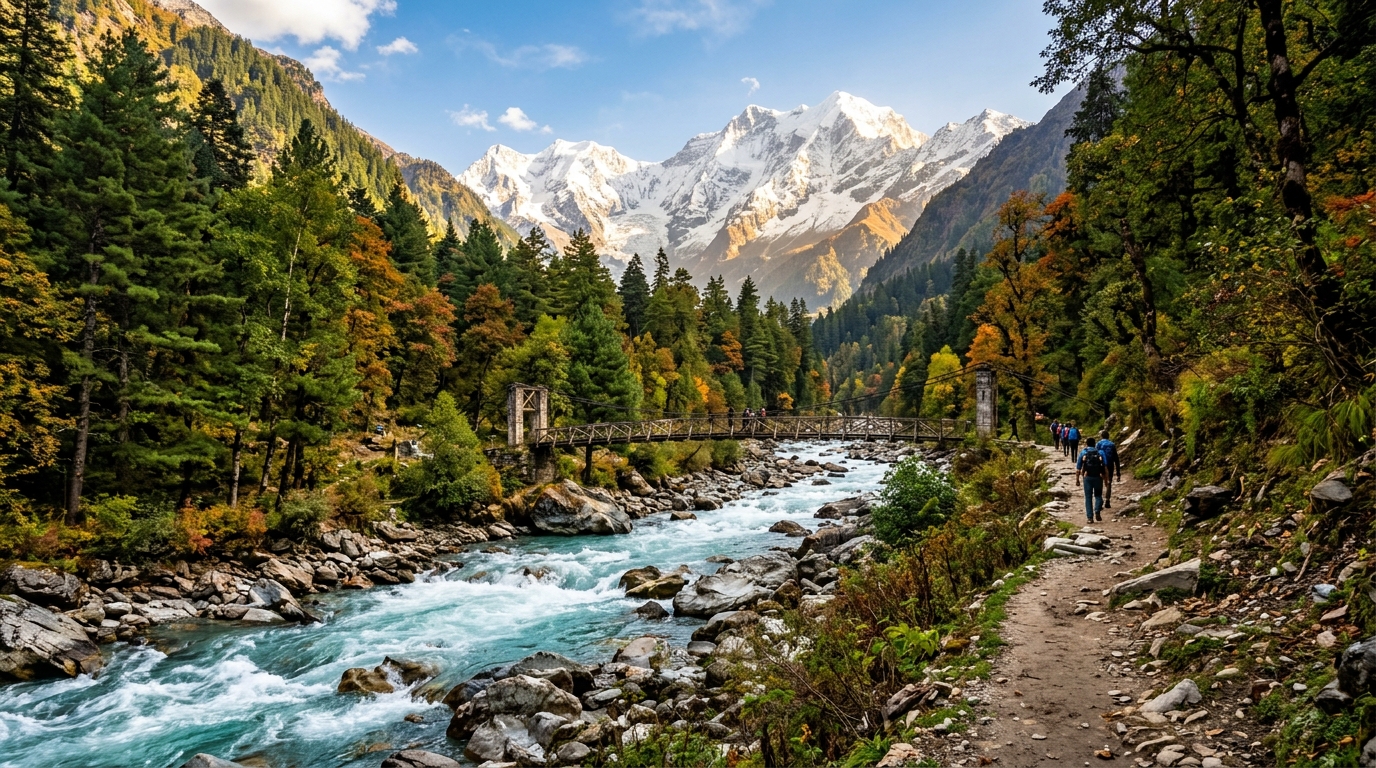
The gushing Supin River accompanied by dense pine forests and wooden suspension footbridges.
3. Front-Row Views of Swargarohini and Jaundhar Glacier
Reaching the Har Ki Dun valley amphitheater rewards trekkers with breathtaking panoramas of the Swargarohini group of peaks. Seeing early morning alpenglow ignite the snow ramparts while sipping hot tea by your tent is an unforgettable Himalayan spectacle.
4. Excursions to Marinda Tal & Maninda Lake
Just a 3 km gentle hike past the main Har Ki Dun camp brings you to Marinda Tal, an emerald glacial tarn framed by moraines and boulders where the rare sacred Brahma Kamal blooms in late summer. For experienced trekkers, an additional route ventures towards the tongue of the massive Jaundhar Glacier.
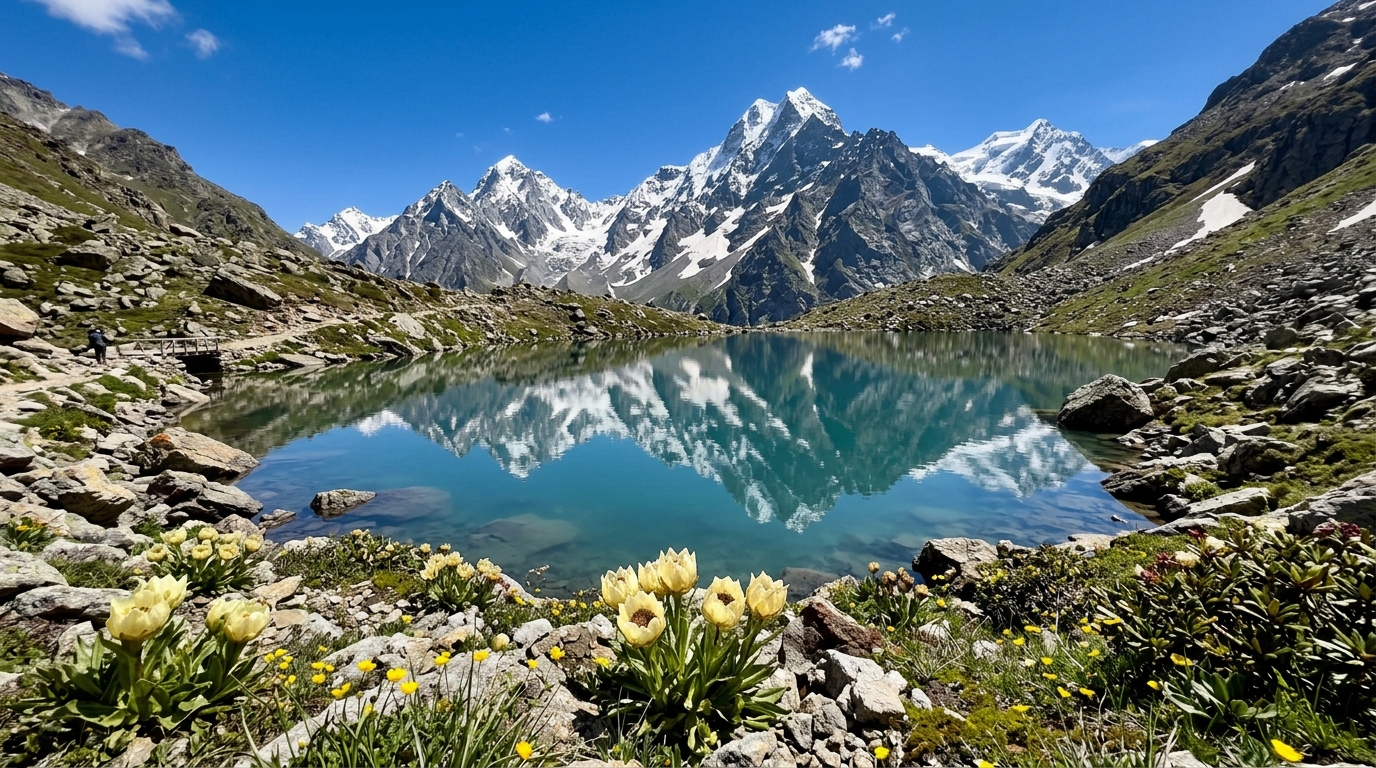
Marinda Tal glacial lake (12,500 ft) mirroring rugged peaks and wild alpine flora.
Best Time to Visit Har Ki Dun Trek
Har Ki Dun is accessible for nearly 9 to 10 months of the year, each season showcasing a distinctly dramatic personality:
Spring to Early Summer (April to mid-June) — Lush Greenery & Wildflowers
Autumn (September to November) — Crystal Clear Views & Crisp Air
Winter (December to March) — The Snow Trek Experience
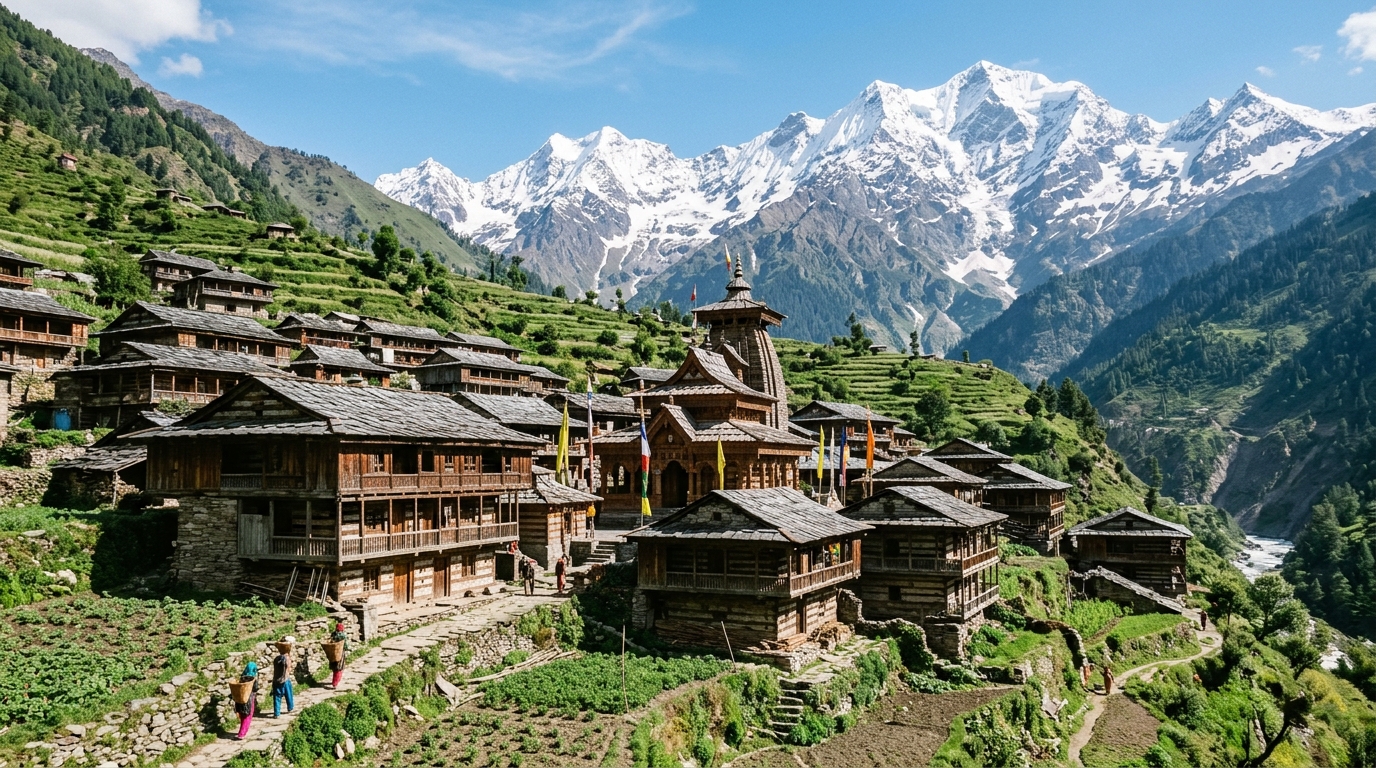
The ancient multi-tiered cedar-wood architecture of Osla village on the terraced mountain slopes.
Detailed 6-Day Itinerary: Dehradun to Har Ki Dun & Return
Day 1: Dehradun to Sankri Base Camp (Drive: 210 km | 8-9 Hours)
Your journey begins early morning from Dehradun Railway Station or ISBT. The scenic mountain drive follows the Yamuna and Tons rivers through Mussoorie, Nainbagh, Damta, Purola, and Mori before entering the Govind Wildlife Sanctuary gate at Netwar. You arrive at Sankri (6,400 ft) by evening. Sankri is a vibrant trekking hub with cozy wooden homestays, gear rental shops, and cafes. Overnight stay in a guest house or homestay in Sankri.
Day 2: Sankri to Taluka (Drive: 12 km) & Trek to Pauni Ghaat / Seema (Trek: 12 km | 5-6 Hours)
After an early breakfast, a 45-minute shared 4x4 Bolero ride navigates the dirt mountain track to Taluka (6,825 ft), the official trekking trailhead. From Taluka, you step onto the trail following the roaring Supin River. The path gently ascends through aromatic pine and chestnut woodlands, passing wooden watermills and apple orchards. You cross tributary bridges near Gangaad village before reaching the riverside campsite at Pauni Ghaat or Seema (8,200 ft). Overnight camping by the river.
Day 3: Pauni Ghaat to Kalkattiyadhar / Boslo (Trek: 8-9 km | 5 Hours)
The trail climbs steadily out of the river bed, offering breathtaking vantage points of the ancient village of Osla perched on the opposite slope. You cross a wooden footbridge and climb terraced fields of amaranth and barley. The tree line gradually transitions from tall pines to stunted birch (bhojpatra) and alpine shrubs. You reach the high panoramic meadow ridge of Kalkattiyadhar (9,800 ft) or Boslo, where your first unhindered views of the Bugyal and snowy peaks appear. Overnight tent camping.
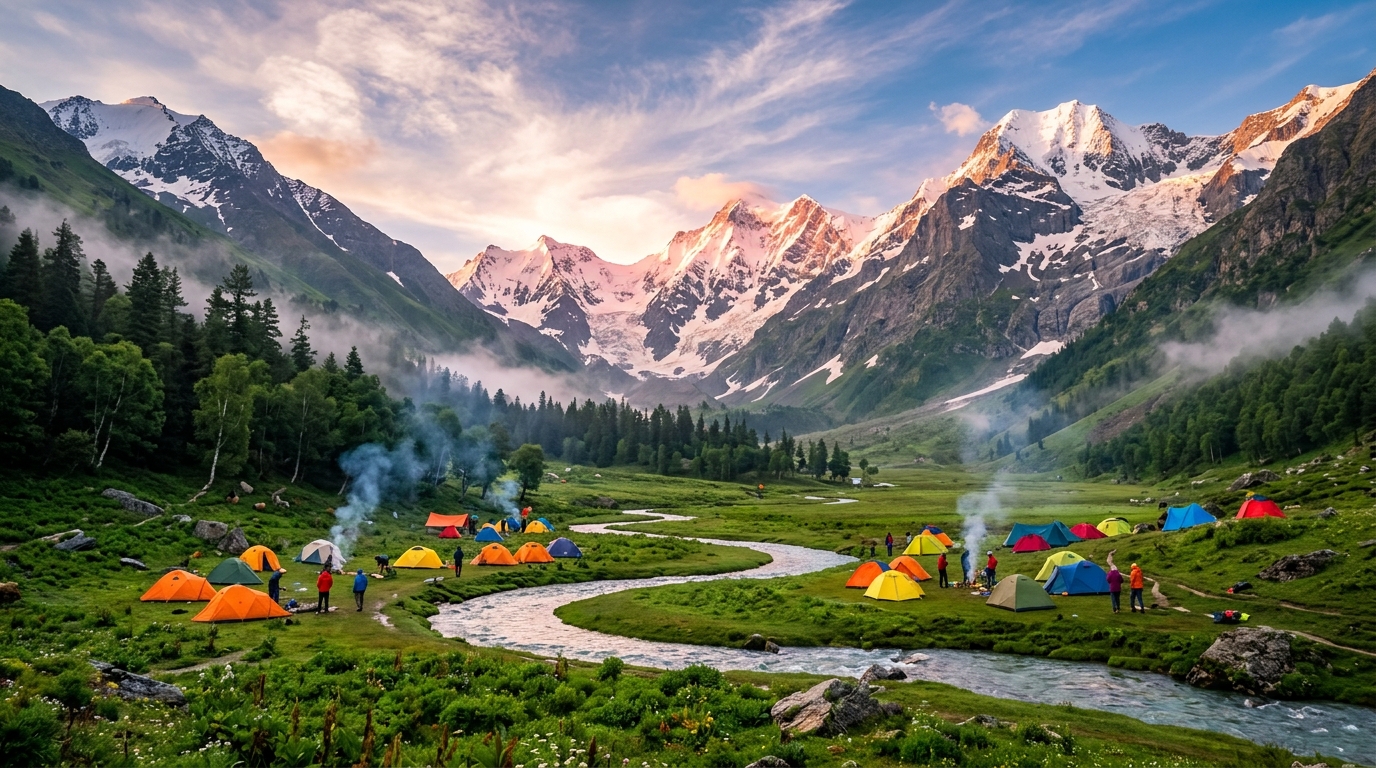
Vibrant alpine campsite pitched along mountain streams inside the Har Ki Dun amphitheater.
Day 4: Kalkattiyadhar to Har Ki Dun & Marinda Tal Excursion (Trek: 9 km | 6 Hours)
Summit day! You start early as the golden sunrise hits the glacier fields. The trail leads across blooming meadows, crystal streams, and gentle glacial moraines before entering the grand expanse of Har Ki Dun (11,800 ft). After soaking in the amphitheater views and resting at the forest rest house grounds, you can push 3 km further along the boulder trail to the peaceful high-altitude lake of Marinda Tal (12,500 ft). The reflection of snow towers in the lake's placid waters is mesmerizing. Return to Kalkattiyadhar or Boslo campsite for a celebratory evening dinner.
Day 5: Kalkattiyadhar to Osla & Trek Down to Pauni Ghaat / Taluka (Trek: 13 km | 6 Hours)
Retrace your steps down the valley with a cultural detour inside Osla village. Visit the ancient Someshwar Devta wooden temple, admire the hand-woven sheep wool shawls crafted by local artisans, and interact with the villagers. Descend through the forest back to Seema / Pauni Ghaat and proceed towards Taluka. Drive from Taluka back to Sankri base camp. Enjoy a hot shower and celebratory Garhwali dinner at your homestay.
Day 6: Sankri to Dehradun (Drive: 210 km | 8-9 Hours)
Board the morning cab or bus from Sankri. Pass through the scenic pine valleys of Mori and Purola, stopping for lunch near Kempty Falls or Mussoorie. Arrive at Dehradun Railway Station by 6:00 PM to 7:00 PM for your onward journey home.
Har Ki Dun Trek Cost Breakdown (2026-2027)
Planning your budget realistically ensures a safe, well-supported expedition. Here is a clear cost estimate per person:
Essential Packing List for Har Ki Dun
Frequently Asked Questions (FAQ)
Is Har Ki Dun Trek suitable for beginners?
Yes, absolutely. The elevation gain on Har Ki Dun is steady and gradual, with no technical rock climbs or dangerous moraine crossings. Anyone with moderate cardiovascular fitness (capable of jogging 4 km in 30 minutes comfortably) can accomplish this trek successfully.
Is there mobile network connectivity on the trek?
BSNL, Jio, and Airtel work intermittently in Purola and Sankri. Beyond Sankri base camp, mobile connectivity drops completely. Make all necessary calls to family and friends before departing Sankri on Day 2.
Can we do Har Ki Dun as a solo trek without a guide?
While the trail is clear, Govind Pashu Vihar National Park authorities strictly mandate registering at the Netwar forest check-post with a registered local certified guide. Traveling with an authorized team guarantees emergency support, medical oxygen, and environmentally responsible waste handling.
What is the difference between Har Ki Dun and Kedarkantha Trek?
Kedarkantha is a peak summit trek (12,500 ft) renowned primarily for winter snow camping, spanning 4 days. Har Ki Dun is a 6-day comprehensive river valley trek (11,800 ft) celebrated for ancient cultural heritage (Osla village), pristine river walks, and close-up views of the Swargarohini massif.

Ready to Trek Har Ki Dun? Connect with Tourscave Mountain Specialists
Call / WhatsApp: +91 7351721624 • Email: info@tourscave.com